

P30 UCSD Vision Research Core Grant
NEI (P30EY022589)
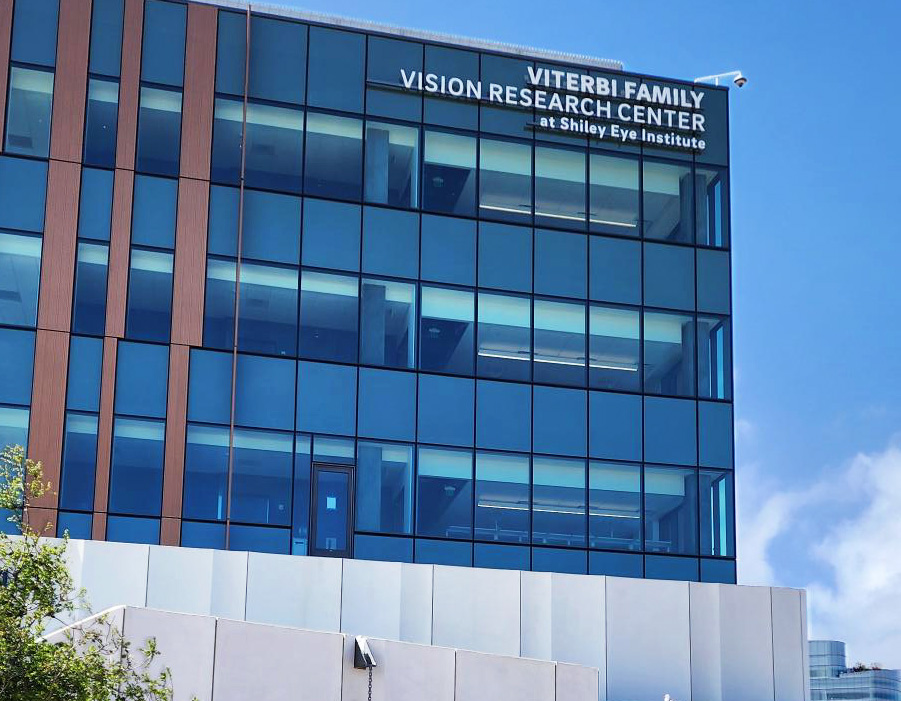
UCSD P30 Core Grant
P30 Core Grant Information:
- PI: Linda Zangwill VisCoreDirector@health.ucsd.edu
- Listserve: Visionresearchinvestigators-l@ucsd.edu
- Cite Funding: P30EY022589
- Email: Module Directors & Staff
Vision Biostatistics Core
This core provides statistical analyses and consultation to investigators. A full-time senior biostatistician is available in the Department of Ophthalmology to advise on analysis strategies and implement sophisticated statistical techniques.
- Directors: Sonia Jain, PhD + Sally Baxter, MD, MSc
- Location: VFVRC rm 2212
- Resources: Statistical Software
- Biostatistician: Eric Buchholz, PhD
- Email: VisCoreBiostat@health.ucsd.edu
Animal Structure & Function Core
This core offers Spectralis (Heidelberg Engineering) spectral domain optical coherence tomograph and Micron III and Micron IV instruments, as well as the VERIS™ multifocal electrophysiological system (Electro-Diagnostic Imaging) and a full-time animal technician to assist with ocular structural imaging and functional imaging (electrophysiology) in animals.
The use of ocular imaging methods that enable longitudinal observations in a living animal can greatly reduce the need to sacrifice animals at different time points in an experiment.
The core will facilitate this process and centralize the expertise, fluorescence imaging, and retinal function testing equipment to allow our researchers to maximize their time and resources.
- Directors: Dirk-Uwe Bartsch, PhD + Derek Welsbie, MD, PhD
- Location: VFVRC 2nd Floor
- Resources: Micron III System, Spectral domain OCT+ Celeris PERG Stimulator
- Animal Technician: John Carroll
- Email: VisCoreAnimalImaging@health.ucsd.edu
Computational Ophthalmology & Biomedical Informatics Core
The Computational Ophthalmology core provides high-performance computing resources and state-of-the-art custom artificial intelligence modelling and computer programming to support UCSD vision investigators’ cellular, animal, and human vision and genomics research.
The powerful GPU computational clusters managed by the San Diego Supercomputer Center, a HIPAA compliant Amazon Web Service cloud computing instance, and custom software tools provided by this core facilitate analysis of these large datasets.
The Computational Ophthalmology core also supports a computer programmer with image analysis and artificial intelligence programming expertise to support computational analyses of both basic science and clinical vision research projects. In addition, essential IT services such as automated off-site backup, fileservers for secure file-sharing and institutional software licenses (MATLAB, FileMaker Pro, Github, FreezerPro) are provided.
- Directors: Linda Zangwill, PhD and Sally L. Baxter, MD, MSc
- Data Scientists: Akram Belghith, PhD and Ruben Gonzales
- Location: VFVRC 2nd Floor
- Resources / Equipment: TSCC GPU condo clusters, AWS HIPPA compliant computing infrastructure, private Github, FreezerPro
- Hardware: GPU cluster located at the San Diego Supercomputer Center, and Intelligent Design for AI-Readiness in Eye Research (iDARE) a HIPAA-compliant private cloud platform hosted in Amazon Web Services
- Email: viscorecompute@health.ucsd.edu or Linda Zangwill or Sally Baxter
Histology, Tissue Processing & High Content Microscopy Core
This core provides rapid characterization of eye tissues with respect to histology, immunohistochemistry, light microscopy and confocal microscopy by supporting a technician who is familiar with ocular anatomy and techniques required to properly process ocular tissues. Specific instrumentation available through this core includes a Cryostat, Microtome HM355S and HistoStar Embedding station.
- Directors: Radha Ayyagari, PhD + Daniel Ju, PhD
- Location: VFVRC 2nd Floor
- Histotechnician: Pooja Biswas
- Email: viscoretissue@health.ucsd.edu
- Equipment / Resources: Cryostat, ThermoScientific AS tissue processor Confocal Microscope
Viral Production & CRISPR Engineering Core
This provides centralized dedicated space, equipment and personnel for the production, isolation and titering of adeno-associated virus (AAV) and lentivirus (LV) vectors and assistance with non-viral CRISPR gene editing.
- Directors: Derek Welsbie, MD, PhD + Karl Wahlin, PhD
- Location: VFVRC 5th Floor
- Project Scientist: Amit Patel, PhD
- Equipment/Resources: Cytiva AKTA Pure FPLC
Information about diversity and inclusion is available through multiple venues. First, there are several websites available that provide information about diversity initiatives across the entire campus (diversity.ucsd.edu) and the (School of Medicine). Many departments have their own websites as well. Virtually all departments at UCSD have identified an Equity, Diversity, and Inclusion (EDI) ambassador, typically a faculty member who spearheads diversity-related initiatives in their areas/specialties and also collaborates with various entities across the medical school.
There are several active affinity organizations for UCSD medical students. These include:
The Association of Native American Medical Students (ANAMS)
The Asian Pacific American Medical Students Association (APAMSA)LGBTQ
Pharmacy and Medical Students (LGBTQ-PhaM)
The Latino Medical Student Association (LMSA)
Medical Students for Justice (MS4J)
The Student National Medical Association (SNMA)
UCSD also offers a curricular pathway called Program in Medical Education – Health Equity (PRIME - HEq), which part of a system-wide effort at the University of California to train physicians better able to meet the needs of the diverse Californian population who are traditionally underserved by the medical system. PRIME-HEq faculty work with students to identify populations or communities at risk for health disparities. Students will then receive exposure, training, and the opportunity to work with the identified group to further their passion in the area and provide knowledge and skills to better equip the students to improve health equity for the group.
- UC Campus Diversity Efforts
- UCSD Office for Equity, Diversity, and Inclusion
- Center for Faculty Diversity and Inclusion
- UCSD School of Medicine Office of Diversity and Community Partnerships
- UCSD Student National Medical Association
- UCSD Black Resource Center
- UCSD Latino Medical Student Association
- UCSD Women’s Center
- UCSD Hispanic Center of Excellence
- UCSD LGBT Resource Center