










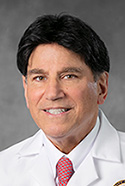
Robert N. Weinreb, MD is the Chair and Distinguished Professor of the Viterbi Family Department of Ophthalmology at the University of California, San Diego as well as Director of the Shiley Eye Institute. He is also a Distinguished Professor in Bioengineering. Dr. Weinreb graduated from Harvard Medical School (M.D.) and the Massachusetts Institute of Technology (Electrical Engineering). A clinician, a surgeon and scientist, he oversees the clinical activities and vision research at the Shiley Eye Institute and within the Department of Ophthalmology. Patients from throughout the world seek his diagnostic and surgical skill. Dr. Weinreb’s clinical and research interests are diverse and range from the front of the eye to the back of the eye. They include ocular imaging, neuroprotection of glaucoma, application of artificial intelligence to healthcare from the eye, and both glaucoma and cataract surgery.
He has served the most prestigious organizations in Ophthalmology as President of the Association for Research in Vision and Ophthalmology, President of the World Glaucoma Association, President of the American Glaucoma Society, President of the American Glaucoma Society Foundation and President of the Pan American Glaucoma Society. The recipient of numerous awards, recently including the Laureate Award from the World Glaucoma Association, Bietti Medal of the International Council of Ophthalmology, Watson Medal of the University of Cambridge (England) and the Innovators Award of the American Glaucoma Society. He was elected to The Ophthalmologist Hall of Fame and has been awarded honorary membership in several national societies, including the Societe Francaise D’Ophthalmologie.
Dr. Weinreb has delivered more than 180 named lectures and serves on several Editorial Boards, including International Glaucoma Review (Chief Editor) and Investigative Ophthalmology and Visual Science. He has trained more than 170 post-doctoral Fellows in Glaucoma, including 22 department Chairs and many others who hold distinguished positions in academia and industry in the United States and throughout the world. His h factor in May 2025 was 156, the highest in world Glaucoma, and his research has ~100,000 citations. He also has been cited for several consecutive years by Expertscape as the #1 expert in world glaucoma for impact and quality of his contributions, and by The Ophthalmologist as #2 for influence in world ophthalmology on their prestigious Power List.
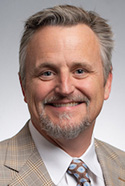
Dr. Girkin is an accomplished clinician, scientist, and surgeon who is fellowship trained in both neuro-ophthalmology, with Dr. Neil Miller at Johns Hopkins, and in glaucoma, with Dr. Robert Weinreb at the Hamilton Glaucoma Center.
Following his fellowship training, Dr. Girkin founded the Glaucoma Service and fellowship program at the University of Alabama at Birmingham (UAB). He later served as UAB’s department chair from 2012 to 2022. During his tenure, the department grew to rank in the top five in NIH funding, while integrating with the Callahan Eye Hospital to form UAB Callahan Eye, which was the largest multispecialty ophthalmology group in Alabama.
Dr. Girkin retired from UAB in 2024 and continues his clinical and research work at UCSD, holding the Viterbi Family Endowed Chair for Optic Nerve Biology. Dr Girkin continues an active clinical and surgical practice at the Shiley Eye Institute focusing on complex glaucoma and cataracts.
His research investigates the mechanisms that underlie variations in individual susceptibility to glaucomatous optic neuropathy using patient-based research, health services research, and human tissue studies. Most recently, Dr. Girkin’s lab has developed a novel ocular hypertension model in the post-mortem human eye, which he is using to define the cellular responses to IOP change in the human eye for the first time.
Dr. Girkin’s work has resulted in extensive publications, and he has received continuous NIH funding for over 20 years. He has lectured extensively to practitioners and researchers worldwide, including providing the 2025 American Glaucoma Society Clinician-Scientist Lecture. He has served in multiple national leadership roles, including serving as President of the American Glaucoma Society.
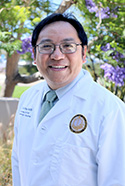
Glaucoma fellowship is the most critical of “next steps” in our careers. In residency, we make life-long relationships, but we also all move in different directions in terms of clinical interest, scholarly pursuits, and personal life. Glaucoma fellowship builds a different kind of family. We are forever linked, not simply based on past shared experiences, but moving in the future: the next challenging glaucoma clinical case, glaucoma research question, or professional advancement hurdle. Personally, I am a former glaucoma fellow at UCSD, and I am forever grateful to have joined a huge family of glaucoma clinicians, researchers, and leaders throughout the world. This family has not only supported me in my education and career growth, but I also know that I am only one family call away from a true world’s expert for any glaucoma question in the future.
Dr. Alex Huang is the newest member of the glaucoma division at the Viterbi Family Department of Ophthalmology and Shiley Eye Institute. He completed his MD/PHD at The Johns Hopkins School of Medicine, his ophthalmology residence at the then Doheny Eye Institute and University of Southern California. Dr. Huang is a former UCSD glaucoma fellow. After fellowship, he became one of the founding members of the Doheny Eye Institute and UCLA affiliation where he also served as the Director of Ophthalmology at the City of Hope Cancer Center. Today, Dr. Huang is a clinician-scientist supported by the NIH and NASA where he studies fluid flow in around the eye for intraocular pressure regulation as well as optic disc edema of astronauts on the International Space Station.
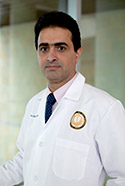
Dr. Moghimi completed a residency in ophthalmology at Farabi Eye Hospital, and subsequently served as Professor and Vice-Chair. He completed fellowships in glaucoma at UC Los Angeles, and UC San Francisco. Dr. Moghimi has an active clinical practice managing adult glaucoma patients and complex cataract surgeries. Dr. Moghimi’s clinical focus is glaucoma including angle closure glaucoma. He is also running myopia and glaucoma clinic with complex diagnostic and management cases.
Dr. Moghimi’s research focuses on functional and structural measurements for optimizing diagnosis of glaucoma or its progression with a focus in advance glaucoma, use of artificial intelligence approaches in glaucoma diagnostics, and study of angle closure disease. He has been the recipient of many awards including the UC Tobacco-Related Disease Research Program, and NIH R01 awards.
Dr. Moghimi is a clinician-scientist who continues to teach and publish extensively. He has several educational awards including outstanding Clinical Teaching Award. He has co-authored over 200 peer-reviewed journal articles and book chapters related to glaucoma and vision science. He is an editorial board member of many ophthalmology journals including Investigative Ophthalmology & Visual Science and, International Glaucoma Review.
My philosophy has been developed through 15 years of teaching residents and glaucoma fellows, and through my role as vice-chair for education early in my career. It’s very simple, as a clinical teacher you learn more from fellows and residents when you teach. I believe careful observation, reading, and creative thinking during practice are the keys to fast learning of the producers. I am rewarded by seeing our fellows bloom into the best glaucoma surgeons in the nation.
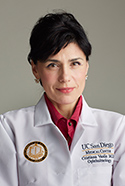
My glaucoma fellowship was transformative. It challenged me to grow as a clinician and deepen my empathy for patients navigating life with chronic vision loss. Surgically the fellowship was a masterclass in precision and adaptability. From traditional procedures like trabeculectomy to MIGS, I gained hands-on experience that taught me not only technique, but judgement – how to intervene, how to manage complications, and how to counsel patients through uncertainty. Equally important, was the growth in my professional independence. I learned to trust my instincts and to embrace flexibility and resourcefulness. Through the mentorship I received and the collaboration I formed, I gained a broader perspective on innovation and a professional network to excel. In sum, my glaucoma fellowship was not just a training ground – it shaped me into a more mature, thoughtful, skilled and compassionate physician. This fellowship didn’t just refine my skills – it clarified my purpose. The lessons I carry forward are not only technical but deeply human.
Cristiana Vasile, MD, MAS is a Board-Certified Ophthalmologist and Fellowship trained Cataract and Glaucoma specialist. Dr. Vasile is a graduate of Bucharest University of Medicine. She spent several years at the Hamilton Glaucoma Center, UC San Diego Shiley Eye Institute doing vision research and served as the founding Director of the UC San Diego Optic Nerve Reading Center. Prior to her internship and residency, she completed a Masters in Advanced Studies (MAS) in Clinical Research at UC San Diego. Subsequently, she completed the Residency in Ophthalmology at UC San Diego and she was the recipient of the UC San Diego Resident Research Award. She then completed a Glaucoma Fellowship at UC San Diego. After fellowship, her research continues to focus on structure and function of the optic nerve. Her work has been published in peer-reviewed ophthalmology journals and she has authored several book chapters.

(858) 534-6290


The information contained in this online site is intended to provide accurate and helpful health information for the general public. It is made available with the understanding that the author and publisher are not engaged in rendering medical, health, psychological, or any other kind of personal professional services on this site. The information should not be considered complete and does not cover all diseases, ailments, physical conditions or their treatment. It should not be used in place of a call or visit to a medical, health or other competent professional, who should be consulted before adopting any of the suggestions in this site or drawing inferences from it.
The information about drugs contained on this site is general in nature. It does not cover all possible uses, actions, precautions, side effects, or interactions of the medicines mentioned, nor is the information intended as medical advice for individual problems or for making an evaluation as to the risks and benefits of taking a particular drug.
The operator(s) of this site, and the publisher, specifically disclaim all responsibility for any liability, loss or risk, personal or otherwise, which is incurred as a consequence, directly or indirectly, of the use and application of any of the material on this site.
Click Here To Accept