










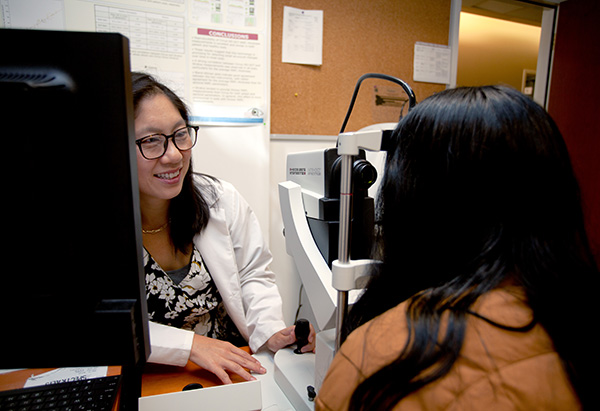
Sally L. Baxter, MD, MSc is a comprehensive ophthalmologist whose research includes a strong emphasis on glaucoma. She is the Chief of the Division of Ophthalmology Informatics and Data Science at the University of California San Diego Viterbi Family Department of Ophthalmology and Shiley Eye Institute.
She is a recipient of the 2020 NIH Office of the Director Early Independence Award and was named in the “40 under 40” list by Ophthalmology Management as well as the "Power List - Rising Stars" in The Ophthalmologist. She received the 2023 NEI Director's Award and the 2024 ARVO Foundation Ludwig von Sallmann Clinician-Scientist Award.
She is a member of the American Academy of Ophthalmology Committee on Artificial Intelligence and chairs the AAO workgroup on data standards.
Her research is focused on big-data analytics, artificial intelligence, and applied informatics for optimizing clinical workflows. She also leads several training programs aimed at expanding the future workforce for both ophthalmology and informatics/data science.
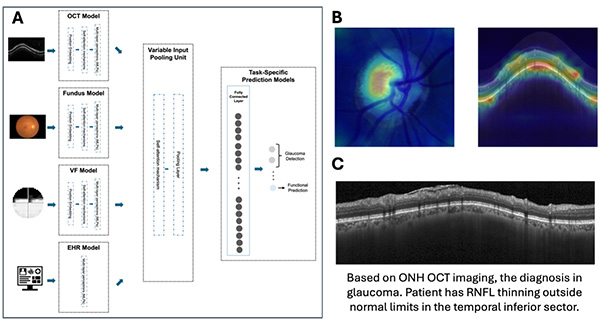
Figure 1: We apply multimodal predictive and g AI methods (A) to detect disease, predict progression, identify impactful structural features (B), and provide clinical decision support (C), among many other tasks.
Dr. Mark Christopher focuses on applying AI methods to clinical ophthalmic care, especially in glaucoma. Dr. Christopher’s lab uses a variety of AI and computational techniques along with longitudinal, multi-modal datasets to address unmet needs in ophthalmology. This includes developing models for diagnosis and screening, predicting visual function, identifying disease progression, and forecasting the need for medical / surgical interventions, as well as other clinically relevant tasks.
Dr. Christohper’s team also applies generative AI models to help review medical images and provide clinical decision support. Their current work is focused on evaluation and deployment of these approaches in real-world clinical settings.
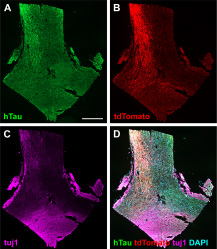
Figure 1: Optic nerve transplanted NSCs extend axons into the optic chiasm.
Research in the Do lab focuses on the development of treatments to regenerate the optic nerve and facilitate the success of vision restorative whole eye transplantations. Using novel applications of stem cell techniques and technologies, we are pioneering the development of optic nerve neuronal relays to restore connections between the eye and the brain. In in vivo experiments, we have demonstrated the generation of long-distance, stem cell-derived axons that project from an optic nerve injury site beyond the optic chiasm and into vision associated targets in the brain. Ongoing work seeks to demonstrate the recovery of functional vision following the treatment of transected optic nerves with stem cell-derived optic nerve relays. Future efforts will use combinatorial approaches including CRISPR-based gene editing and gene therapies to complement the vision restorative effects of optic nerve neuronal relays. Ultimately, this work will enable whole eye transplants and the ability to restore vision to people with severe visual impairments or blindness.
Dr. Jiun Do is an Assistant Adjunct Professor of Ophthalmology at the Viterbi Family Department of Ophthalmology and Shiley Eye Institute. He earned his M.D. and Ph.D. in Neurosciences from the University of California San Diego. Dr. Do completed his ophthalmology residency at the University of Southern California Roski Eye Institute and his glaucoma fellowship at the University of California San Diego Shiley Eye Institute and the Hamilton Glaucoma Center. Following fellowship, he joined the faculty at the Shiley Eye Institute as a clinician-scientist. Dr. Do is supported by the NIH support to develop stem cell-based methods to regenerate the optic nerve and restore vision. He is also engaged in clinical research and clinical trials in the management of glaucoma.

Figure legend: Protective effect of AIBP on mitochondrial dysfunction and glia-driven neuroinflammation induced by glaucomatous insults. PMID: 40349106 DOI: 10.1016/j.ymthe.2025.05.009
Dr. Wonkyu “Daniel” Ju, PhD, Professor and Hanna and Mark Gleiberman Chancellor’s Endowed Chair in Glaucoma Research in the Viterbi Family Department of Ophthalmology and the Shiley Eye Institute (SEI), is an internationally recognized leader in gene therapy and mitochondrial biology for glaucoma and neurodegenerative eye diseases. Dr. Ju’s research focuses on unraveling how mitochondrial dysfunction, neuroinflammation, and neurodegeneration drive glaucomatous optic neuropathy. His lab is pioneering adeno-associated virus (AAV)-based gene therapies beyond conventional glaucoma treatments, primarily aiming to lower intraocular pressure. By targeting the underlying biological causes of disease progression, his work promises to transform how glaucoma is treated.
A key focus of Dr. Ju’s research is developing gene therapies that: 1) reduce retinal neuroinflammation, 2) protect retinal ganglion cells and glial cells from neurodegeneration, and 3) address mitochondrial dysfunction and protection in glaucoma. His team is investigating the crucial role of glia-driven neuroinflammation, neurodegeneration, and neuroprotection in optic nerve damage and retinal ganglion cell death. By leveraging advanced animal models and precision gene delivery systems (AAV and lentiviral vectors), they aim to protect retinal ganglion cells and glial cells, ensuring both safety and therapeutic efficacy. Through detailed studies of transgene expression and function, Dr. Ju’s research bridges laboratory breakthroughs with real-world clinical applications—bringing us closer to effective, disease-modifying treatments for glaucoma patients worldwide.
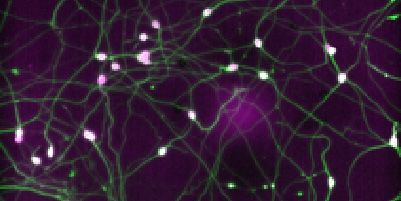
Figure 1: Representative image of induced retinal ganglion cells generated by cellular reprogramming of human pluripotent stem cells with retinal ganglion cell expressed transcription factors.
My overarching interests are understanding how the human retina forms, why retinal neurons degenerate during disease, and ultimately, how to restore vision after the retina has already failed. My interests range from neuroprotection and retinal development to retinal degenerative (RD) diseases such as glaucoma, Leber’s congenital amaurosis, retinitis pigmentosa, and age-related macular degeneration.
My group leverages CRISPR-based gene-editing to create stem cell-based human retinal models with reporters capable of giving real-time information on retinal cell fate. With these tools, we have developed in vitro models of human retinal development using 3D retinal organoids, which we have improved by incorporating small-molecule drugs and optimizing the cellular microenvironment. The result is organoids with greatly improved reproducibility in terms of size and cellular composition.
In addition, my lab has used multi-omics approaches to study RNA, microRNAs, and the chromatin landscape of developing retinas and will use this new information to advance the field of endogenous regeneration of human retinas. Using these tools, we explore retinal cell fate decisions by engineering PSCs with transgene cassettes capable of delivering cell-type-specific transcription factors; one recent study identified a 4-gene combination that greatly facilitated retinal ganglion cell formation for glaucoma.
Finally, we are greatly interested in exploring reparative therapies by exploring endogenous regeneration of Müller cells, which is a central focus of studies aimed at regenerating both retinal ganglion cells and photoreceptors.
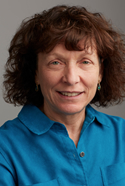
Dr. Linda Zangwill leads a clinical research team dedicated to advancing the understanding of structural and functional changes in the aging and glaucomatous eye.
Her team integrates optical coherence tomography imaging, visual function testing, and rich clinical and demographic data to develop innovative methods for distinguishing highly myopic eyes with and without glaucoma.
They also apply artificial intelligence and machine learning techniques to improve glaucoma detection and identify individuals at highest risk of vision loss.
Dr. Zangwill’s group actively collaborates in several large international consortia focused on glaucoma, myopia, and AI-driven approaches to prevent blindness.

(858) 534-6290


The information contained in this online site is intended to provide accurate and helpful health information for the general public. It is made available with the understanding that the author and publisher are not engaged in rendering medical, health, psychological, or any other kind of personal professional services on this site. The information should not be considered complete and does not cover all diseases, ailments, physical conditions or their treatment. It should not be used in place of a call or visit to a medical, health or other competent professional, who should be consulted before adopting any of the suggestions in this site or drawing inferences from it.
The information about drugs contained on this site is general in nature. It does not cover all possible uses, actions, precautions, side effects, or interactions of the medicines mentioned, nor is the information intended as medical advice for individual problems or for making an evaluation as to the risks and benefits of taking a particular drug.
The operator(s) of this site, and the publisher, specifically disclaim all responsibility for any liability, loss or risk, personal or otherwise, which is incurred as a consequence, directly or indirectly, of the use and application of any of the material on this site.
Click Here To Accept